â
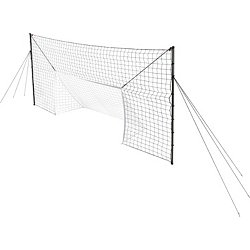
Enhance your training sessions with our versatile backstop rebounders, designed for athletes of all ages. These durable and portable systems provide reliable ball return, allowing for efficient practice in baseball, soccer, lacrosse, and more. With adjustable angles and sturdy construction, our rebounders help improve accuracy and skill development. Perfect for backyard use or team training, these essential tools ensure you get the most out of every practice. Elevate your game and maximize your training potential with our high-quality backstop rebounders.
A backstop rebounder is a training tool designed to help athletes improve their skills in sports like baseball, softball, and soccer. It typically features a net or a target that rebounds balls back to the player after they are thrown or kicked at it. This allows for repetitive practice without the need for a partner, helping athletes refine their throwing, catching, or shooting techniques. The adjustable angles and positions of the rebounder can accommodate various drills and skill levels.
Using a backstop rebounder for training offers several advantages. It allows athletes to practice their throwing and catching skills by providing immediate feedback, as the ball rebounds back to them. This helps improve hand-eye coordination and reaction times. Additionally, rebounders can be used for various sports, making them versatile training tools for both individual and team practice sessions.
A backstop rebounder can benefit various sports, particularly baseball, softball, and soccer. In baseball and softball, it helps players practice their throwing and catching skills by returning the ball for repeated drills. For soccer, it allows players to work on passing, shooting, and ball control by providing a reliable surface for the ball to bounce back. Overall, these training aids enhance skill development across multiple athletic disciplines.
When choosing the right size backstop rebounder, consider the space available for training and the age or skill level of the athlete. Larger rebounders can accommodate a wider range of activities and provide more versatility, while smaller models may be more suitable for limited spaces or younger players. Additionally, think about the specific sports you will be practicing, as different sports may require different rebounder dimensions for optimal performance. Ultimately, selecting a size that fits your training environment and goals will enhance your practice sessions.
Backstop rebounders are typically made from durable materials designed to withstand repeated impacts. Common materials include high-strength nylon or polyester for the netting, which provides resilience and flexibility. The frame is often constructed from steel or aluminum, ensuring stability and longevity. Some models may also feature weather-resistant coatings to enhance durability in outdoor conditions.
Yes, there are different styles of backstop rebounders available to suit various sports and training needs. These rebounders can vary in size, shape, and design, allowing for specific uses such as baseball, softball, or soccer training. Some models may feature adjustable angles or dual functions, enabling athletes to practice different skills effectively. Whether for individual training or team drills, you can find options that cater to different preferences and requirements.
Backstop rebounders designed for outdoor use are typically made from durable materials that can withstand various weather conditions. Many feature sturdy frames and weather-resistant nets to ensure longevity and consistent performance. While they are built to endure regular use, the lifespan can vary based on factors such as exposure to the elements and frequency of use. Proper care and maintenance can help extend their durability.
When selecting a quality backstop rebounder, consider the size and adjustability to ensure it meets your training needs. Look for durable materials that can withstand repeated impacts, as well as a sturdy frame for stability during use. Additionally, features like portability and ease of setup can enhance your training experience, allowing for convenient use in various locations. Finally, consider rebound angles and surface design, as these can affect the accuracy and effectiveness of your practice sessions.
Yes, a backstop rebounder can be effectively used for both practice and game situations. During practice, it helps athletes improve their skills by allowing them to receive and return balls, enhancing their reaction time and accuracy. In game situations, it can serve as a useful tool for warm-ups or drills, providing a consistent target for players to work on their throwing and catching techniques. This versatility makes it a valuable addition to training routines for various sports.
To set up a backstop rebounder for optimal performance, first choose a flat, level area with enough space for both the rebounder and the players. Position the rebounder at an angle that allows for effective ball return, typically between 30 to 45 degrees, depending on the sport. Ensure it is securely anchored to prevent movement during use, and adjust the tension of the netting if applicable to achieve the desired rebound effect. Regularly check the setup for stability and make adjustments as needed to maintain performance.
Continue browsing