â
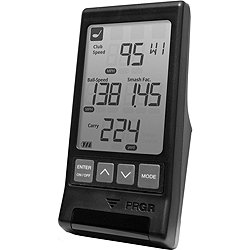
Enhance your golf game with our advanced launch monitors, designed to provide precise data and insights for every swing. These portable devices offer essential metrics such as ball speed, launch angle, and distance, helping you analyze and improve your performance on the course. With user-friendly interfaces and compatibility with various devices, tracking your progress has never been easier. Whether you're a beginner or a seasoned pro, our launch monitors are perfect for refining your skills and taking your game to the next level. Experience the future of golf training today!
 (1)
A launch monitor is a device used to measure various aspects of a golf shot, including ball speed, launch angle, spin rate, and distance. It typically uses radar or camera technology to capture data as the ball is hit, providing golfers with valuable insights into their performance. This information can help players analyze their swings, improve their technique, and make informed decisions about equipment. Many launch monitors are portable, making them convenient for use on the driving range or during practice sessions.
When selecting a launch monitor, consider features such as accuracy in measuring key performance metrics like ball speed, launch angle, and spin rate. Portability can be important if you plan to use it on the course or at different locations. Additionally, look for connectivity options, such as compatibility with mobile devices or software for data analysis, which can enhance your training experience. Finally, battery life and ease of setup are practical aspects that can affect your overall usage.
A launch monitor can enhance your golf game by providing detailed data on your swing and ball performance. It measures key metrics such as ball speed, launch angle, and spin rate, allowing you to analyze your shots more effectively. With this information, you can identify areas for improvement and make informed adjustments to your technique. Additionally, using a launch monitor can help you track your progress over time, making practice sessions more productive.
A launch monitor provides a variety of data that can help analyze your performance. You can expect metrics such as ball speed, launch angle, spin rate, and carry distance, which are essential for understanding your shot dynamics. Additionally, some monitors may offer information on club speed and angle of attack, giving you a comprehensive view of your swing mechanics. This data can be valuable for improving your game and making informed adjustments.
Launch monitors are designed to be versatile and can be used in both indoor and outdoor settings. Many models feature portability and user-friendly setups, making them ideal for practice sessions at home or on the course. However, the effectiveness of a launch monitor may vary based on environmental conditions, such as lighting and space. It's important to consider the specific requirements of the monitor to ensure optimal performance in your chosen setting.
Portable launch monitors are designed for easy transport and setup, making them ideal for use on the go, whether at the driving range or during practice sessions. They typically offer a more compact design and may rely on mobile devices for data display. Stationary launch monitors, on the other hand, are usually set up in a fixed location, such as a home or commercial facility, and often provide more advanced features and greater accuracy due to their larger sensors and technology. The choice between the two depends on your specific needs for convenience versus performance.
Launch monitors are designed to provide accurate measurements of various performance metrics, such as ball speed, launch angle, and spin rate. The level of accuracy can vary based on the technology used and the specific conditions during testing. Many models utilize advanced sensors and algorithms to deliver reliable data, making them useful tools for golfers looking to improve their game. However, it is important to consider that environmental factors and user setup can influence the readings.
Yes, a launch monitor can be used for different types of golf clubs, including drivers, irons, and wedges. These devices are designed to analyze various aspects of your swing and ball flight, providing valuable data regardless of the club being used. Many launch monitors can track metrics such as club speed, ball speed, launch angle, and spin rate, which are relevant for all types of clubs. This versatility makes them useful for golfers looking to improve their performance across their entire set.
When setting up a launch monitor, consider the space requirements, including the distance from the hitting area to the monitor itself, as well as the height and angle for optimal readings. Ensure that the surface is level and that there is adequate lighting to enhance the accuracy of the data captured. Additionally, familiarize yourself with the specific calibration and connectivity needs of the device to ensure seamless operation during use. Finally, consider the type of data you want to analyze, as this may influence the placement and setup of the monitor.
For beginners, it is often recommended to look for launch monitors that are user-friendly and provide essential data without overwhelming complexity. Many entry-level models offer basic metrics such as ball speed, launch angle, and distance, making them suitable for those new to tracking their performance. Additionally, portable options can be convenient for practice sessions at various locations. It's beneficial to choose a model that includes easy-to-understand features and a straightforward setup process.
Continue browsing